
Twenty ABL deals closed last week. The active commercial lenders behind them ranged from Wells Fargo running a $1.275 billion revolving credit for a major retailer to First Business Bank doing a $1 million ABL facility for a silicone recycler. That range is the point. ABL is not a uniform product and it is not a uniform market. Specialty non-bank lenders closed seventy-five percent of US deals. Banks closed twenty-five percent. For active commercial lenders monitoring the ABL market, the non-bank share isn’t new, but the gap is widening.
Who Are The Lender Draft Top 5 ABL Lenders, and What Did They Do Last Week?
| Rank | Lender | Borrower | Amount | Structure | Sector |
|---|---|---|---|---|---|
| 1 | Wells Fargo (agent) + Pathlight Capital (managing agent) | Belk | $1.275B | ABL revolver ($900M) + FILO ($375M) | Retail |
| 2 | PNC Business Credit | Ox Industries | $30M | ABL revolving credit | Industrial/Metals |
| 3 | Tiger Finance | Undisclosed department store | $25M | Term loan | Retail |
| 4 | Siena Lending Group | Undisclosed organic beverage company | $20M | Revolving credit | Food and beverage |
| 5 | eCapital | Undisclosed forged steel company | $18M | ABL revolving credit | Manufacturing |
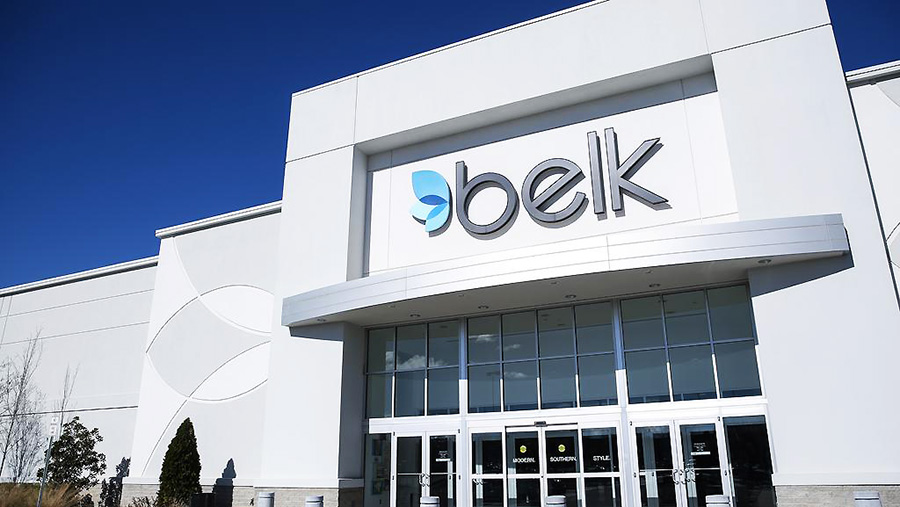
Deal 1: Wells Fargo and Pathlight Capital for Belk, $1.275B. This is a turnaround financing for a department store chain. The structure is a $900 million revolving credit plus a $375 million FILO facility, with Wells Fargo as the ABL agent and Pathlight Capital as the managing agent on the FILO. FILO stands for first-in, last-out, which tells you everything about the risk positioning: Pathlight is getting paid more because they are last out. Wells Fargo is the senior secured agent on a credit that needs two different cost-of-capital layers to work. Thats the retail sector in 2026.
Deal 2: PNC Business Credit for Ox Industries, $30M. A revolving credit facility for a metals manufacturer. PNC is a traditional ABL bank doing traditional ABL work in manufacturing. This deal also happened to close in the same week that Post Road Equipment Finance put a $33 million equipment term loan into the same company under a growth capital structure. Two lenders, two products, one borrower. The borrower relationship is clearly active.
Deal 3: Tiger Finance for an undisclosed department store, $25M. Tiger Finance is a specialty lender. A $25 million term loan to a department store is a distressed asset play, not a growth financing. The department store sector and the credit structure are telling the same story.
Deal 4: Siena Lending Group for an organic beverage company, $20M. A revolving credit facility for a food and beverage company. Siena moved up four spots in the ABL tracker last week. This deal is the most likely coinciding credit.
Deal 5: eCapital for a forged steel company, $18M. A revolving credit for a manufacturing borrower described in the release as a turnaround situation.
“Turnaround situations require a financing partner who understands the business and can respond to its evolving requirements.” Michael Conrad, SVP Business Development Officer, eCapital
That line isn’t just a press release quote. It describes the actual credit profile of the ABL market right now. The deals that are closing are not straightforward growth financings. They are workouts, turnarounds, and companies that outgrew their bank credit appetite.
The Belk deal distorts the sector volume table: retail looks dominant because $1.275 billion is in one deal. Remove Belk, and manufacturing and industrial at $73.3 million across five deals is the more active sector by deal count.
International ABL: The Hard Asset Group
LTP Sports, a Canadian sports and entertainment business, closed a $65 million factoring facility with FGI Finance last week. That is the only international ABL deal in the package. $65 million versus approximately $1.46 billion in US disclosed ABL volume. International ABL ran at roughly four cents on the US dollar last week.
What Should a Borrower or Active Commercial Lender Do?
ABL borrowers in manufacturing or industrial: The revolving credit market is active in your sector. PNC, eCapital, Siena, and First Business Bank all closed deals in the manufacturing category last week. Specialty non-bank lenders are closing faster than banks on middle-market credits under $50 million.
ABL borrowers in retail: The market will still lend, but the structure is more expensive. A FILO tranche behind the senior ABL revolver is the current form for a leveraged or distressed retailer. Budget for the pricing gap between the senior revolver rate and the FILO rate.
Active commercial lenders in ABL: The staffing sector closed one deal last week at $15 million. The sector is small by volume but consistent by deal flow. Republic Business Credit has built a real practice there.
“The temporary staffing industry moves at an incredible pace, and our team’s specialized knowledge allowed us to quickly understand the unique cash flow dynamics of this business.” Eric Dorner, Senior Vice President Business Development Officer, Republic Business Credit
If you’re a staffing company looking for an ABL lender, that specialization matters more than it sounds. The cash flow cycle in staffing is genuinely unusual, and a generalist lender takes longer to get to yes.
Counts reflect closed financings announced October 13 to 19, 2026, and tracked by The Lender Draft. Amounts are as announced.
Keep reading:
Top Industrial
Top City
Frauds and Bankruptcies
Lender of the Week
Market Signals
Commercial Real Estate Lender Rankings
Growth Capital Lender Rankings
Asset-Based Lender Rankings