
FINAL FOUR ROUND
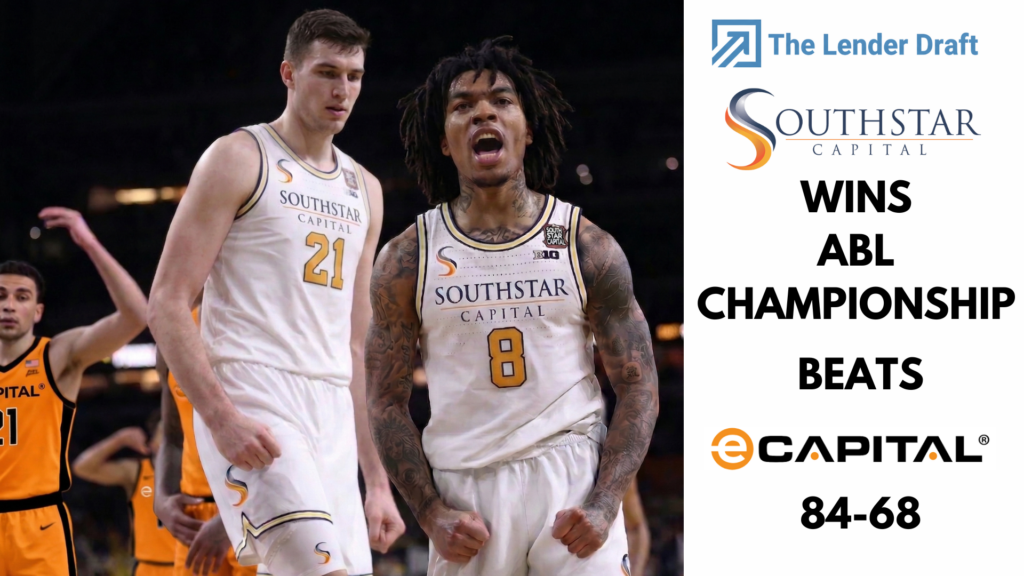
CHAMPIONSHIP GAME
TOP ISSUES & OPPORTUNITIES FOR ABL INDUSTRY
1) DOGE executes 33,700+ federal contract terminations, instantly converting prime government receivables from pristine ABL collateral to illiquid, DCAA-settlement-dependent WIP.
Federal receivables have long commanded 85–90% advance rates precisely because the Assignment of Claims Act protections made them feel bulletproof. A Termination for Convenience blows that assumption apart. DCAA audit timelines run months to years, meaning terminated contract receivables will breach 90/120-day cross-aging eligibility rules quickly and get pushed out of the borrowing base, potentially creating overadvance exposure overnight. With $5.1B in DoD contracts hit and 6,150+ companies affected, any ABL lender with government contractor exposure in their portfolio needs to run a stress test on their borrowing base certificates right now.
Groups That Benefit:
- Commercial Receivables ABL Lenders: As government contractors scramble for liquidity with degraded federal collateral, lenders willing to underwrite commercial and private-sector receivable stacks gain a new origination lane.
- Factoring Companies Serving the Defense Tier: Smaller subcontractors getting squeezed by prime contractor cash management changes need immediate invoice monetization; factors with the operational speed to onboard quickly will see inbound deal flow.
- Restructuring and Special Situations Advisors: The complexity of T4C settlements creates a pipeline for advisors helping contractors navigate liquidity crises and debt restructuring.
2) The Strait of Hormuz blockade is spiking transpacific freight rates 11% week-over-week and elongating cash conversion cycles for every ABL borrower who imports inventory, right as in-transit sublimits are maxing out.
Ocean freight from Asia to the U.S. West Coast hit $2,420/FEU (up 11% WoW), and East Coast lanes climbed to $3,350/FEU, per Freightos. For ABL borrowers carrying imported inventory, the combination of higher landed costs and extended transit times creates a double squeeze: in-transit inventory sublimits get exhausted faster, while the actual NOLV of goods sitting on rerouted vessels or stranded in the Gulf deteriorates relative to what the last appraisal showed. Borrowers without pricing power will see EBITDA compress, FCCR breach, and springing dominion events accelerate all before the goods even hit the warehouse.
Groups That Benefit:
- Domestic Manufacturers with U.S. Sourcing: Companies that don’t touch imported raw materials or finished goods gain a cost and timing advantage over import-dependent competitors; their collateral quality holds while others erode.
- Supply Chain Finance Providers: Longer cash conversion cycles mean borrowers need more working capital for longer; supply chain finance utilization rates are going up across the board.
- Freight Forwarders and Logistics Intermediaries: Rerouting complexity creates demand for expert logistics management; firms helping importers navigate Cape of Good Hope alternatives see a surge in business.
3) Southstar Capital closes three ABL facilities totaling $14.25M across aerospace components, baked goods, and solar installation, a micro-signal that non-bank ABL appetite for collateral-heavy, non-glamorous sectors remains wide open globally.
While the macro narrative is all credit tightening and BDC redemption gates, Southstar’s week tells a different story at the deal level: a $5M A/R facility for an aerospace components supplier backed by a private credit firm, an $8.5M combined A/R and inventory facility for a frozen bakery products company, and a $750K A/R line for a solar installation contractor expanding into the Northeast. These aren’t high-yield tech deals. They’re working-capital-intensive, receivable-backed businesses in sectors with genuine demand tailwinds aerospace, food manufacturing, and energy services. Non-bank ABLs willing to underwrite operational complexity rather than wait for clean credits are closing deals while bank ABL desks sit on their hands.
Groups That Benefit:
- Non-Bank ABL Platforms with Operational Underwriting Capability: Lenders who can evaluate combined A/R and inventory facilities for manufacturers and distributors are closing deals that the banks are declining on complexity grounds alone.
- Aerospace Component Suppliers: New aircraft manufacturing demand is driving backlogs, and suppliers with extended payment terms from OEM customers need receivables financing to fund production; the Southstar deal is a template.
- Solar and Energy Services Contractors: Expansion-stage contractors taking on larger customers with longer payment cycles need A/R facilities to bridge the gap between project completion and payment.
FINAL FOUR ROUND
WINNERS
#1 SouthStar Capital defeats #2 Baker Garrington 78-62
#1 eCapital defeats #7 Amerisource Business Capital 80-78
TOP ISSUES & OPPORTUNITIES FOR ABL INDUSTRY
1) The CFPB’s 1071 Retreat and State Disclosure Fragmentation Are Quietly Reshaping the Cost Stack for Alternative Lenders
The CFPB’s one-year delay of Section 1071 compliance and its proposed structural overhaul, cutting the small business revenue threshold from $5M to $1M and raising the origination trigger from 100 to 1,000 transactions, provides immediate margin relief to MCAs and smaller commercial lenders. Simultaneously, California SB 362, Texas HB 700 (requiring MCA disclosure and OCCC registration), and New York’s FAIR Act updates are creating a genuinely expensive multi-state compliance patchwork. Lenders providing back-leverage lines to alternative finance companies need to audit the legal enforceability of the underlying loan portfolios securing their facilities.
Groups That Benefit:
- Merchant cash advance providers: The explicit exclusion of MCAs from 1071 coverage protects their operating margins and preserves their viability as borrowers under specialty finance credit lines.
- Smaller commercial lenders under the 1,000-transaction threshold: Avoiding the expensive data-collection and software integration requirements directly improves EBITDA and borrowing base eligibility.
- SBA 7(a) lenders targeting the now-narrowed eligible borrower pool: Reduced competition from MCA and alternative lender overlap allows them to tighten pricing on prime credit opportunities.
2) Strait of Hormuz Closure Wrecks ABL Borrowing Bases and In-Transit Inventory Is the Immediate Casualty
Operation Epic Fury has collapsed daily vessel transits through the Strait of Hormuz by 94.2%, spiked crude above $115/barrel, driven U.S. diesel to $5.38/gallon nationally, and pushed ocean freight rerouting around the Cape of Good Hope adding 60+ days to standard transit times. For inventory-based ABL facilities, the mechanics are immediately dangerous: in-transit sublimits are consuming revolving availability for goods that won’t clear customs for months, while the landed cost of imported inventory is artificially inflating borrowing base values against a collateral base that won’t liquidate at those prices. Simultaneously, freight factoring companies financing carriers are facing a lethal spread compression diesel up 38.6%, spot freight rates up only 25%.
Groups That Benefit:
- U.S. domestic steel and aluminum producers: 25% tariffs plus maritime disruption make imported metals economically uncompetitive, giving domestic mills extraordinary pricing power and expanding margins.
- Electrical infrastructure and copper processing manufacturers: AI data center buildout requires 122 GW of capacity by year-end, creating a structural copper deficit of 150,000 tonnes, and their inventory is functionally liquid.
- Cape of Good Hope routing providers and air freight carriers: Rerouted vessels and desperate shippers have driven Suezmax earnings above $300K/day and air freight rates up 70%.
3) Mistral AI’s €830M Bank Debt Facility Is Quietly Repricing European Sovereign AI as a Credit Asset Class
Mistral AI secured €830M in debt financing from a consortium including Bpifrance, BNP Paribas, Crédit Agricole, HSBC, MUFG, and Natixis to build a 44MW Paris data center equipped with 13,800 Nvidia GB300 chips. This isn’t a venture round it’s traditional bank debt secured against capital-intensive AI infrastructure, and it signals that European sovereign-adjacent AI companies are now accessing bank lending markets rather than private credit. For U.S. lenders, this establishes an implicit international pricing floor for AI infrastructure debt: if Mistral can raise bank-rate euro-denominated debt against GPU collateral and data center assets, U.S. AI infrastructure borrowers have a credible cross-border comparable to leverage in lender negotiations.
Groups That Benefit:
- U.S. AI infrastructure and data center borrowers: Mistral’s facility demonstrates that GPU-backed debt structures are bank-creditworthy, creating comparable leverage for domestic borrowers negotiating venture debt or equipment finance terms.
- European bank credit desks covering AI infrastructure: The Mistral deal establishes a replicable template for sovereign-adjacent AI lending that will drive deal flow across the continent.
- Equipment finance lenders specializing in data center hardware: GB300-class Nvidia chips as collateral now have an implicit precedent supporting high advance rates given their documented demand and scarcity.
NEXT WEEK FINAL FOUR MATCHUPS
#1 SouthStar Capital vs. #1 eCapital
ELITE 8 ROUND
WINNERS
West Region: #1 SouthStar Capital, #2 Republic Business Credit (close win by 2)
South Region: #1 Great Rock Capital (close win by 3), #7 Amerisource Business Capital
East Region: #1 JP Morgan (close win by 3), #2 Baker Garrington
MidWest Region: #1 eCapital (close win by 4), #3 JPalmer Collective
BIGGEST UPSET WIN: #7 Amerisource Business Capital over #1 Great Rock Capital
TOP ISSUES AFFECTING ABL INDUSTRIES
1) Saks Global’s Erratic Chapter 11 Store Closure Pattern Is a Live NOLV Stress Test for Retail ABL
The Saks Off 5th liquidation in Eastchester — with 80% markdowns on luxury goods including lab-grown diamond jewelry — and the last-minute reversal on the Neiman Marcus White Plains closure show exactly how fast retail collateral values can disintegrate when a borrower enters distressed territory. Static quarterly NOLV appraisals cannot keep pace with a Chapter 11 debtor that can flip store status overnight. Retail ABL lenders need real-time liquidator monitoring and daily fleet tracking, not a 90-day appraisal cycle.
Groups That Benefit:
- Third-party liquidation firms — distressed retail Chapter 11 inventory creates a steady pipeline of GOOB sale mandates.
- Opportunistic retail buyers and off-price operators — deeply discounted luxury inventory creates secondary market buying opportunities.
- Real estate landlords who negotiate store stays — the White Plains Neiman Marcus reversal shows some landlords have leverage to preserve tenancy and avoid dark space.
2) Iran Conflict Fertilizer Shock Is Collapsing Agribusiness Margins and ABL Borrowing Base Integrity
Strait of Hormuz disruptions are throttling nitrogen-based fertilizer flows from the Middle East at the exact moment northern hemisphere farmers are entering planting season. Urea and phosphate prices are spiking, inflating agricultural inventory costs in borrowing bases — but that cost inflation is not matched by a corresponding increase in NOLV. When geopolitical tensions ease and fertilizer prices normalize, inflated inventory values will reverse sharply, potentially triggering borrowing base deficiencies without any change in physical collateral.
Groups That Benefit:
- Domestic fertilizer producers and North American nutrient suppliers — supply disruption from the Middle East shifts pricing power to domestic producers.
- Agribusiness ABL lenders with commodity price hedging requirements baked into covenants — lenders who required price risk management as a condition of advance now have documented protection.
- Government-backed agricultural finance programs — federal support rollouts in response to the input cost crisis improve liquidity for farm borrowers in the short term.
3) Republic Business Credit’s Cross-Border Confectionery Factoring Deal Is a Template for the International Operator Problem
Republic’s factoring facility for a global confectionery manufacturer entering the U.S. market — a company with a long international track record but no U.S. credit history and an international ownership structure — is a clean illustration of a borrower profile that bank ABL simply cannot serve and that specialist factoring is uniquely positioned to monetize. The borrower’s problem wasn’t credit quality. It was that traditional bank underwriting uses domestic financial history as the primary lens, and this company had none. Factoring against U.S. receivables, evaluated on obligor quality rather than borrower history, solved the capital access problem entirely. As global trade disruptions — tariffs, Iran conflict, supply chain reshoring — push more international operators to establish U.S. footprints, this borrower profile is going to be more common, not less.
Groups That Benefit:
- Specialty factoring firms with cross-border and CPG expertise (Republic-style platforms) — the international-operator-entering-the-U.S. deal profile is increasing as global supply chain disruption accelerates reshoring and U.S. market entry.
- Commercial finance brokers with international client networks — foreign-owned U.S. subsidiaries with no domestic credit history are among the hardest borrowers to place and generate the most broker value-add.
- Importers and international manufacturers establishing U.S. distribution — factoring against U.S. receivables provides the working capital bridge to build domestic operations without requiring a domestic credit track record.
NEXT WEEK FINAL FOUR MATCHUPS
#1 SouthStar Capital vs. #2 Baker Garrington
#7 Amerisource Business Capital vs. #1 eCapital
SWEET 16 ROUND
WINNERS
West Region: #1 SouthStar Capital, #2 Republic Business Credit (close win by 2)
South Region: #1 Great Rock Capital (close win by 3), #7 Amerisource Business Capital
East Region: #1 JP Morgan (close win by 3), #2 Baker Garrington
MidWest Region: #1 eCapital (close win by 4), #3 JPalmer Collective
BIGGEST UPSET WIN: #7 Amerisource Business Capital over #3 VFI Corporate Finance
TOP ISSUES AFFECTING ABL INDUSTRIES
1) Section 122’s 150-Day Tariff Fuse Is Detonating Borrowing Bases Right Now — Duty Reserves Aren’t Optional Anymore
The Supreme Court’s IEEPA invalidation and the administration’s immediate pivot to a 10–15% Section 122 import surcharge has introduced a 150-day window of extreme landed-cost volatility for every ABL borrower touching imported goods. Unpaid customs duties carry statutory lien priority that primes a senior secured lender’s first-position UCC-1 filing — meaning the duty reserve conversation isn’t a future field exam item, it’s a right-now portfolio management decision. NOLV appraisals completed before February 20 are functionally obsolete for any borrower with offshore sourcing, import-dependent inventory, or supply chain exposure to China, Southeast Asia, or other high-tariff origins, and the week’s ABL deal flow confirms lenders are actively pivoting capital toward domestic manufacturers who don’t have this problem.
Groups That Benefit:
- Domestic metals manufacturers and distributors (like the Southeast steel and tube deal closed by Commercial Finance Partners this week) – No offshore inventory exposure means no Section 122 landed-cost spike, making their collateral more predictable and their borrowing bases more defensible.
- Specialist ABL lenders with field exam depth – The borrowing base complexity created by tariff volatility creates a moat for lenders with real field examination capability over those relying on annual appraisals.
- Litigation finance and special situations shops – The $175 billion in potential IEEPA refund claims creates a structured bridge facility opportunity at premium yield against illiquid but real contingent assets.
2) Middle Market Bankruptcy Wave Is Now Six Major Filings Per Week — Distressed ABL Deal Flow Is Surging but Recovery Rates Are Getting Uglier
Corporate distress in the middle market has hit its highest sustained rate since the 2020 pandemic, averaging six major bankruptcy filings per week (liabilities exceeding $50 million), with annual filings up 7.1% year-over-year to 24,737. For ABL lenders, this means the passive forbearance era is over — the portfolio management posture has shifted to active distressed restructuring, with turnaround lenders seeing immense deal flow while second-lien and unsecured recovery rates face severe impairment. The week’s deal data reflects the bifurcation: Versant Funding’s $5 million non-recourse facility for a 90-year-old PE-owned turnaround play, and Saks Global’s $1.2 billion DIP facility, show that distressed capital is actively deploying on both ends of the size spectrum.
Groups That Benefit:
- Turnaround and DIP lenders – The sustained rate of Chapter 11 filings is generating high-yield deal flow — Saks Global’s $1.2B DIP and Oaktree/Anchorage accumulating First Brands Group DIP paper at 13–16 cents on the dollar are this week’s headline examples.
- Non-recourse factoring specialists like Versant Funding – PE-owned turnarounds under cash pressure need speed and flexibility that traditional ABL can’t deliver — Versant’s model of underwriting the customer rather than the borrower is purpose-built for this moment.
- UCC Article 9 foreclosure advisors and restructuring counsel – Lenders are increasingly choosing extrajudicial enforcement over Chapter 11 to avoid cost and noise, driving demand for Article 9 expertise.
3) DOGE’s $71 Billion Contract Termination Wave Is Converting Eligible GovCon A/R Into Ineligible Collateral — and Most ABL Lenders Haven’t Caught Up
Over 10,700 federal contracts totaling $71.1 billion have been terminated since January 2025, with 273 contracts worth $5.1 billion cut in just the past four weeks. When a federal contract hits a Termination for Convenience under the FAR, outstanding invoices and work-in-progress convert from eligible accounts receivable into termination settlement proposals — which virtually every standard ABL credit agreement classifies as ineligible collateral. The mechanical result is immediate, massive borrowing base haircuts for GovCon borrowers, with no deterioration in the underlying business required. The DOGE termination list is concentrated in consulting, social science, IT management, and DEI-adjacent programs — lenders need to know their exposure to these categories by name, not by NAICS code.
Groups That Benefit:
- Defense-tech ABL borrowers with dual-use commercial traction – DoD is actively pivoting to commercial technology partnerships, creating revenue streams diversified away from easily-terminated discretionary appropriations.
- Restructuring and turnaround advisors with FAR expertise – GovCon borrowers hitting T4C ineligibility events need forbearance structuring and equity cure analysis — fast and by people who understand the Federal Acquisition Regulation.
- Baker Garrington and staffing-focused factoring specialists – The staffing deals closed this week (Texas and North Dakota) show that labor-intensive GovCon-adjacent businesses are still generating eligible A/R — especially when the end customer is private sector.
NEXT WEEK ELITE 8 MATCHUPS
West Region
#1 SouthStar Capital vs. #2 Republic Business Credit
South Region
#1 Great Rock Capital vs. #7 Amerisource Business Capital
East Region
#1 JP Morgan vs. #2 Baker Garrington
MidWest Region
#1 eCapital vs. #3 JPalmer Collective
FIRST ROUND
WINNERS
West Region: #1 SouthStar Capital, #2 Republic Business Credit, #3 Wells Fargo (close win by 3), #4 USD.Ai (close win by 1)
South Region: #1 Great Rock Capital, #3 VFI Corporate Finance, #4 Second Ave Capital Partners (close win by 2), #7 Amerisource Business Capital
East Region: #1 JP Morgan, #2 Baker Garrington (close win by 2), #3 The Hedaya Capital Group, #4 nFusion Capital
MidWest Region: #1 eCapital, #2 Eldridge Capital (close win by 4), #3 JPalmer Collective (close win by 4), #5 Mitsubishi HC Capital (close win by 1)
BIGGEST UPSET WIN: #7 Amerisource Business Capital over #2 First Business Bank
TOP ISSUES AFFECTING ABL INDUSTRIES
1) Starting March 1, any business with even 1% LPR or foreign national ownership is auto-denied for SBA-guaranteed financing. That’s roughly 3,358 credit facilities per year and billions in federally subsidized capital that just evaporated. These are cash-flowing, collateral-rich businesses in hospitality, logistics, convenience retail, and tech services that were previously banked at prime + 2.75% through the 7(a) program — now they need working capital lines, equipment financing, and AR facilities from non-bank lenders at commercial rates. This is forced migration at scale, and it’s happening right now.
Groups That Benefit:
- Non-bank ABL and factoring shops (SouthStar Capital, nFusion Capital, Faccorp International) — They’re about to see a surge of high-quality, previously bank-financed borrowers who need AR lines, inventory advances, and equipment financing but can’t access SBA products anymore.
- Private credit funds and cash flow lenders — Immigrant entrepreneurs who were relying on 504 real estate loans or 7(a) working capital now need growth capital at market rates, creating premium yield opportunities on performing credits.
- Commercial finance brokers — Deal flow from LPR-owned businesses just became a volume game; brokers who move fast can place dozens of orphaned credits with ABL and factoring clients hungry for collateral.
2) The Supreme Court nuked IEEPA tariffs, the administration replaced them with a 10% Section 122 global surcharge that’s legally shaky, and Treasury signaled intent to raise it to 15% while the trade court weighs an injunction. This is an environment where corporate supply chain managers and the lenders financing them cannot accurately model landed costs for the next six to nine months. Every import borrower’s working capital needs, inventory turn assumptions, and gross margin forecasts are now built on quicksand.
Groups That Benefit:
- Domestic manufacturers and reshoring beneficiaries — Companies that produce goods in the U.S. or USMCA countries just gained a 10-15% cost advantage over foreign competitors as import tariffs compound.
- Customs brokers and trade compliance consultants — Every importer needs legal and operational guidance to navigate CAPE refund claims, Section 122 exemptions, and the coming Section 301/232 investigations.
- ABL lenders with domestic-focused borrower bases — Clients who source domestically or have already reshored production face no tariff-related collateral volatility, making them safer credits in a chaotic trade environment.
3) U.S.-Israel strikes killed senior Iranian leadership, Brent crude spiked above $90, and commercial shipping through the Strait of Hormuz, which handles 20% of global oil supply, is now operationally disrupted. Extended disruption in the Strait of Hormuz embeds structural inflation back into the U.S. economy, paralyzing the Fed’s ability to cut rates and ensuring the “higher-for-longer” credit environment persists indefinitely. Floating-rate borrowers, particularly those financed by BDCs and growth capital lenders, are already struggling to service SOFR + 600-800 bps debt loads. If energy prices spike and the Fed holds rates through year-end, expect a fresh wave of defaults, PIK toggles, and liability management exercises across late-stage SaaS, logistics, and manufacturing borrowers.
Industries / Groups That Benefit:
- Domestic energy producers and oilfield services companies — Higher crude prices translate directly into improved cash flow, stronger borrowing bases, and renewed capital access for E&P firms and drilling contractors.
- ABL lenders financing domestic energy infrastructure — Equipment financing, inventory advances, and AR facilities for oilfield services companies become highly attractive credits in a $90+ Brent environment.
- Defense contractors and aerospace firms — Geopolitical instability drives military procurement budgets higher, creating sustained deal flow for lenders financing the defense industrial base.
NEXT WEEK SWEET 16 MATCHUPS
West Region
#1 SouthStar Capital vs. #4 USD.Ai
#2 Republic Business Credit vs. #3 Wells Fargo
South Region
#1 Great Rock Capital vs. #4 Second Avenue Capital Partners
#3 VFI Corporate Finance vs. #7 Amerisource Business Capital
East Region
#1 JP Morgan vs. #4 nFusion Capital
#2 Baker Garrington vs. #3 The Hedaya Capital Group
MidWest Region
#1 eCapital vs. #5 Mitsubishi HC Capital
#2 Eldridge Capital vs. #3 JPalmer Collective